The postures came late. The original work was attention, steadiness and non-attachment, trained daily until they became character. Here is how the old words map onto a modern day.
“Abhyāsa-vairāgyābhyāṁ tan-nirodhaḥ.”
Yoga Sūtra 1.12
Steady practice, and letting go of the result. That is the whole method, and it is the opposite of how most of us live: sporadic effort, obsessive attachment to outcomes. Every program on this site is built as a short daily practice with a result you are asked not to chase. The handstand is simply the most honest teacher of it.
Dhāraṇā · attention
Dhāraṇā is placing the mind on one point and keeping it there. The modern mind is pulled forty times an hour. Training single attention is the first and most practical skill yoga offers.
Practised in: breath counting, drishti, balance drills.
Sthira-sukham · steadiness and ease
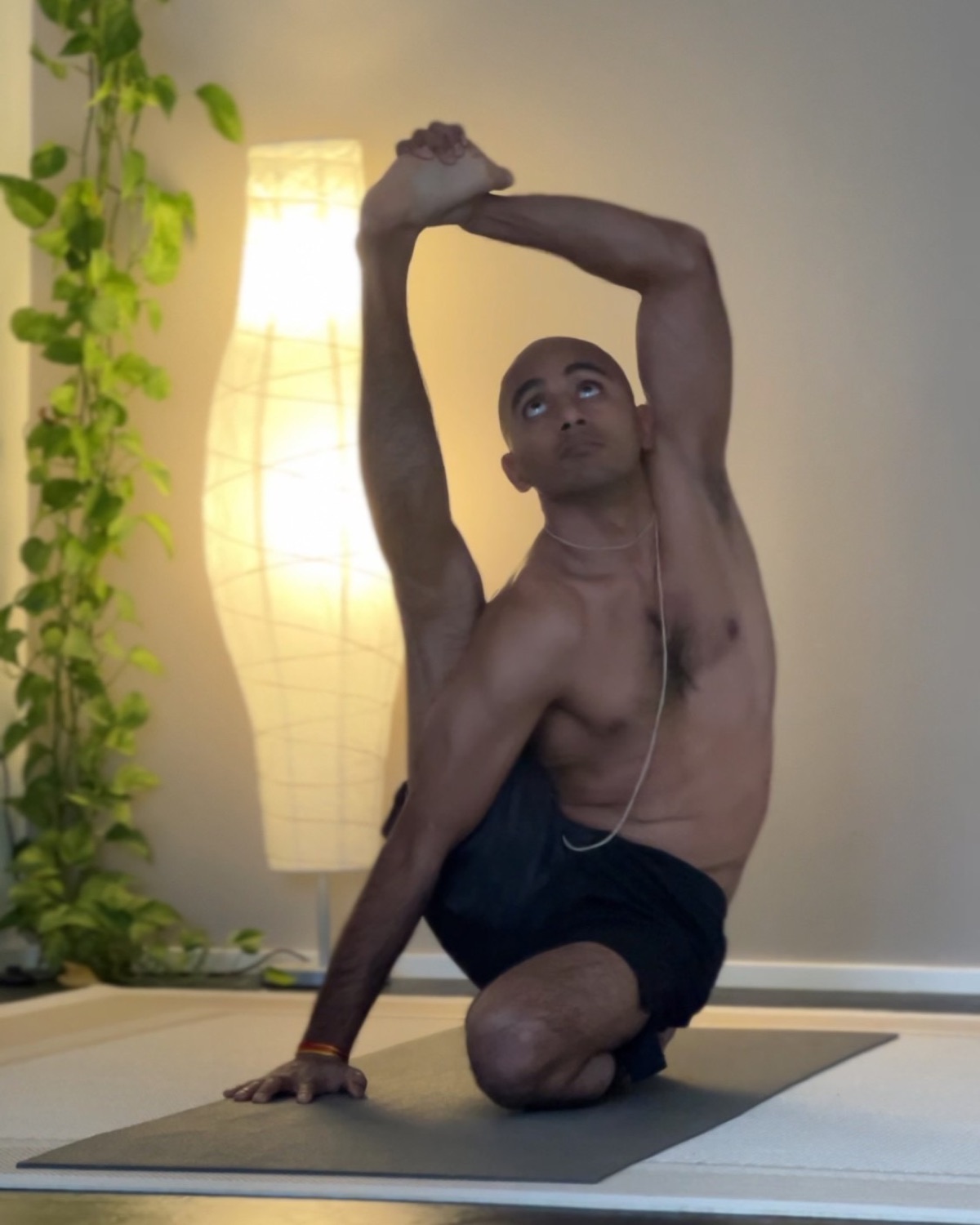
Sūtra 2.46 asks for a posture that is steady and easy. Not forced, not slack. The same quality you want in a hard conversation or a long week.
Practised in: long holds, flexibility work, seated stillness.
Vairāgya · non-attachment
Care about the work, release the outcome. It is the hardest teaching and the most freeing. You cannot white-knuckle a handstand or a life.
Practised in: falling drills, breath retention, rest days kept.